
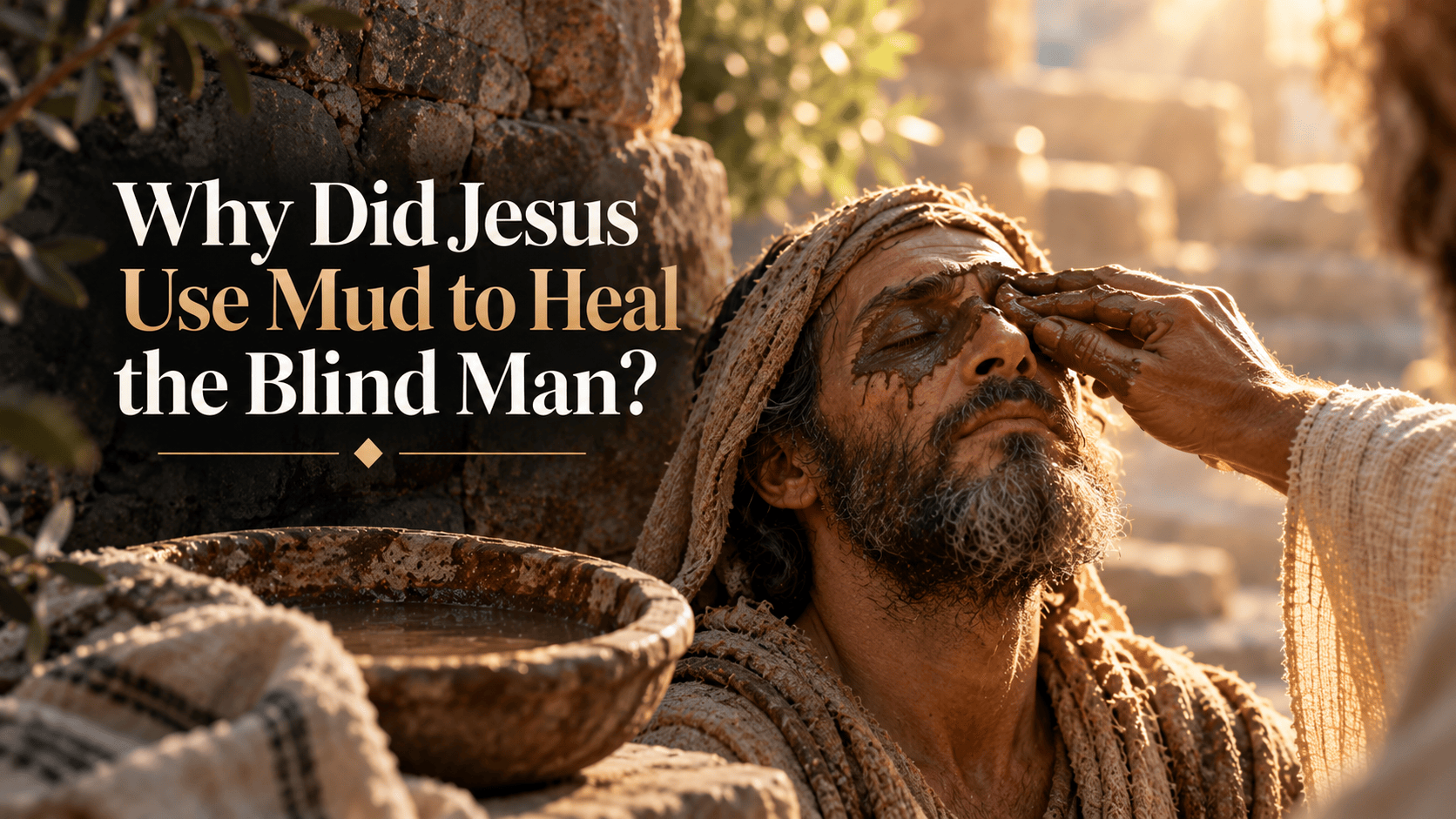
Why did Jesus use saliva and mud to heal the blind man? When I was first asked that question, I did not know how to answer it. I prayed about it, and I began to see a connection between the way God created Adam and the way Jesus restored this man’s sight.
I believe this miracle points us back to the God who gives life. Jesus was doing more than putting mud on someone’s eyes. He was bringing restoration to a man who had been blind from birth.
Let us begin with the account in John 9, and then I want to explain why I connect it with creation.
A man who had never seen
The disciples asked Jesus whether the man’s blindness was the result of his own sin or his parents’ sin. Jesus rejected that explanation and directed their attention to the works of God being revealed in him (John 9:1–3).
Then Jesus spat on the ground, made mud with His saliva, and applied it to the man’s eyes. He told him to wash in the pool of Siloam. The man went, washed, and returned able to see (John 9:6–7).
Think about that. This was a man who had been blind from birth. He could not give himself sight, but Jesus could restore what he had never experienced.
The unusual part of the miracle is the method Jesus used. Why mud? And why His saliva rather than water?
The connection with creation
Genesis 2:7 tells us that God formed man from the dust of the ground and breathed into him the breath of life. The man became a living being. God formed him, and God gave him life.
When I look at Jesus making mud in John 9, I see a connection with that original act of creation. He is using the earth from which humanity was formed as part of an act of restoration.
I believe Jesus was pointing back to the Genesis story. The God who formed Adam is the giver of life, and this miracle shows Jesus restoring a man who could not repair his own condition.
That is an encouraging connection. The One who gives life has the power to restore.
Why I believe the saliva mattered
Jesus could have mixed the earth with water, but He used His own saliva. I believe that matters.
My understanding is that His saliva carried His own DNA and that, through this supernatural act, He supplied what was missing or damaged in the blind man’s body. I believe His sinless DNA brought restoration to what had caused the man’s blindness.
That is how I understand the connection between creation and this healing. God breathed life into Adam, and here Jesus uses something from Himself in an act that restores sight.
The power did not belong to the mud by itself. It belonged to Jesus. This was a supernatural miracle, and the man returned seeing because Jesus had acted in his life.
God brings life and restoration
This miracle also directs my attention to the larger theme of God’s restoration. Revelation 22:1–2 describes the river of life and the tree of life, whose leaves are for the healing of the nations.
From the life God gives in Genesis to the healing imagery in Revelation, we see His power to bring life. The man in John 9 experienced that power when Jesus restored his sight.
I want you to keep your attention on the One who performed the miracle. The method may raise questions, but the outcome is clear: a man who had been blind could now see.
Bring your need to Jesus
When we lay hands on people and pray in Jesus’ name, we are looking to Him for healing. We are believing that His power can bring restoration to the person we are praying for.
That is where I want this account to strengthen your faith. Bring your need to Jesus. Pray with confidence in His ability to heal, and keep your trust in Him.
The man could not restore his own sight. Jesus could. The Savior who encountered him is the One we look to when we pray.